
Cart onboarding
THE GOALROLETEAM MEMBERSIncrease cart activations by adding cart to our product onboarding flow
Product design lead
Project manager, frontend developer, backend developer
A bit about onboarding
Recharge's merchant onboarding is built around one primary goal: getting new merchants to activate the subscription widget. Every step in the flow is designed to reduce friction and get merchants to that first activation as fast as possible.
Historically, the cart, a complementary product that lets merchants offer a native cart experience for subscriptions, had no presence in onboarding. Merchants who eventually set it up typically did so later, on their own, well after their initial setup. This meant a meaningful product surface was going largely undiscovered.
The question we set out to answer: could we introduce cart setup into onboarding without jeopardizing the subscription widget activations that onboarding was already driving?
The existing onboarding flowThe design problem
Adding a new step to onboarding is never without risk. Every additional screen is a potential exit point, and the existing flow was already performing reasonably well, averaging 43.95% completion and about 780 widget activations per month in the six months prior.
There were 3 main design challenges:
Don't hurt widget activations. The subscription widget is the core product. We don’t want widget activation to decrease as a result of this experiment.
Make cart setup feel like an opportunity, not a chore. If merchants perceive the cart step as mandatory overhead, they'll skip or abandon.
Respect different merchant needs. Not every merchant wants or needs cart setup during their first session. The flow had to accommodate both.
The solution was to make cart setup fully optional, skippable at any point, with clear "explore" paths for merchants not ready to commit.
Design iterations
We asked ourselves questions as we went into the design phase. Should the merchant be taken right into the cart onboarding? Should it come later? Should we give choices?
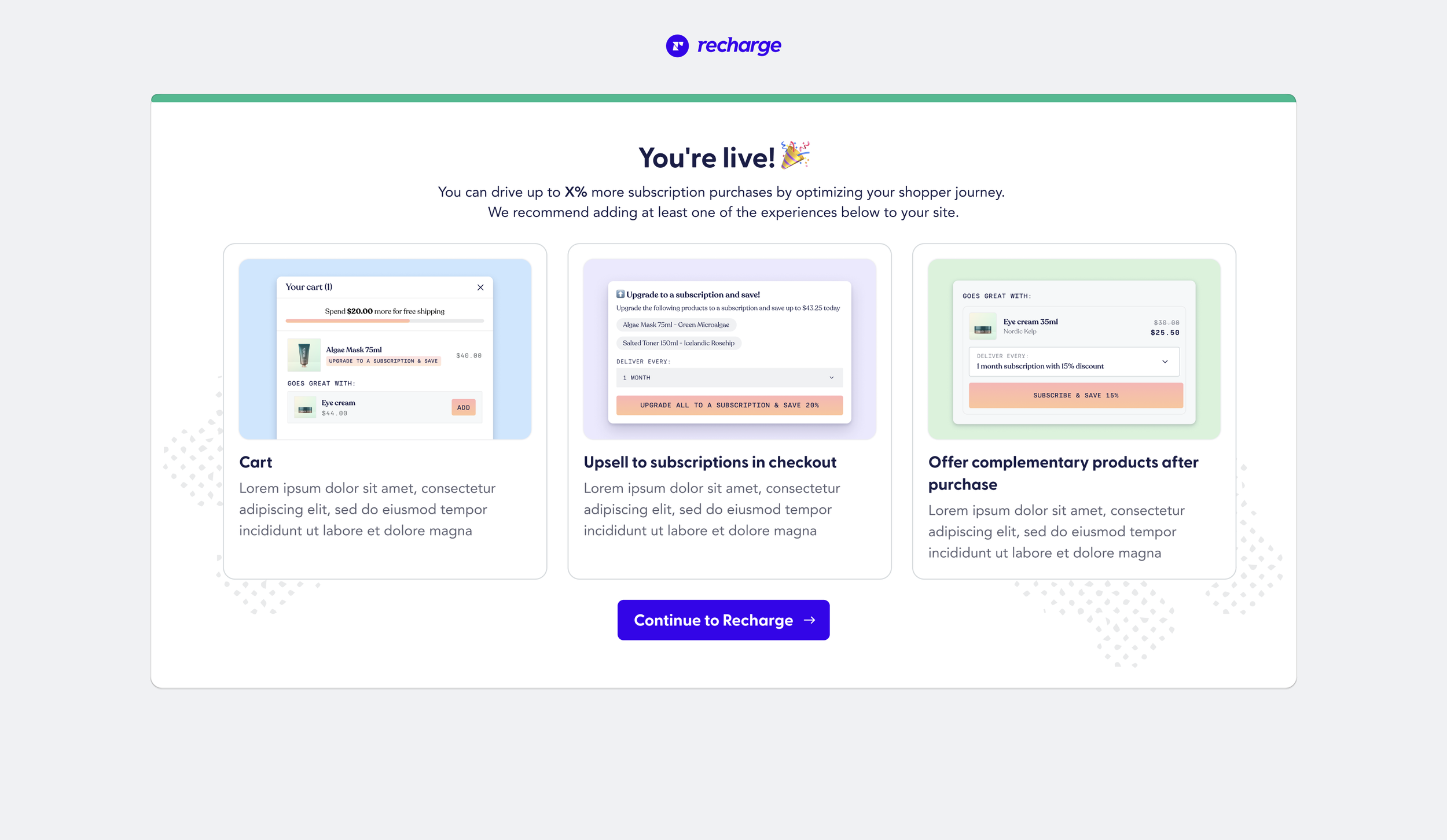
A choose your own adventure approach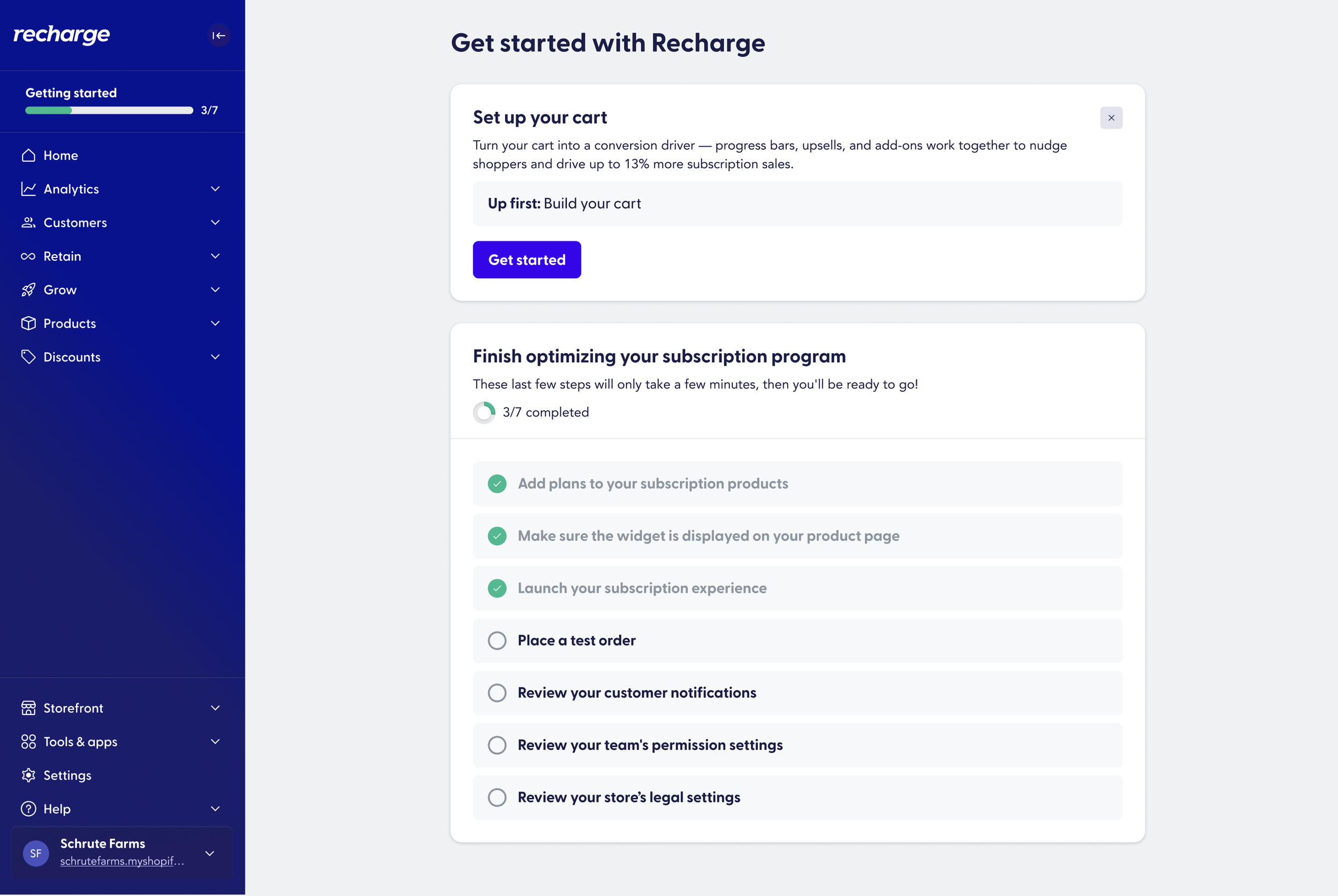
A module in app approachIn the spirit of experimentation and wanting to make a decision, we decided to dive in the deep end and put cart setup front and center in our guided onboarding.
More onboarding, more problems?
Expanding onboarding gave us a new challenge—wayfinding. Previously, we had a small progress bar at the top of onboarding that would fill progressively as merchants completed steps. However, that didn’t scale to a multi-module approach, where the cart onboarding was completely optional. We also wanted to give merchants more clarity on where they were at in their onboarding journey and still give that psychological reward of making progress.
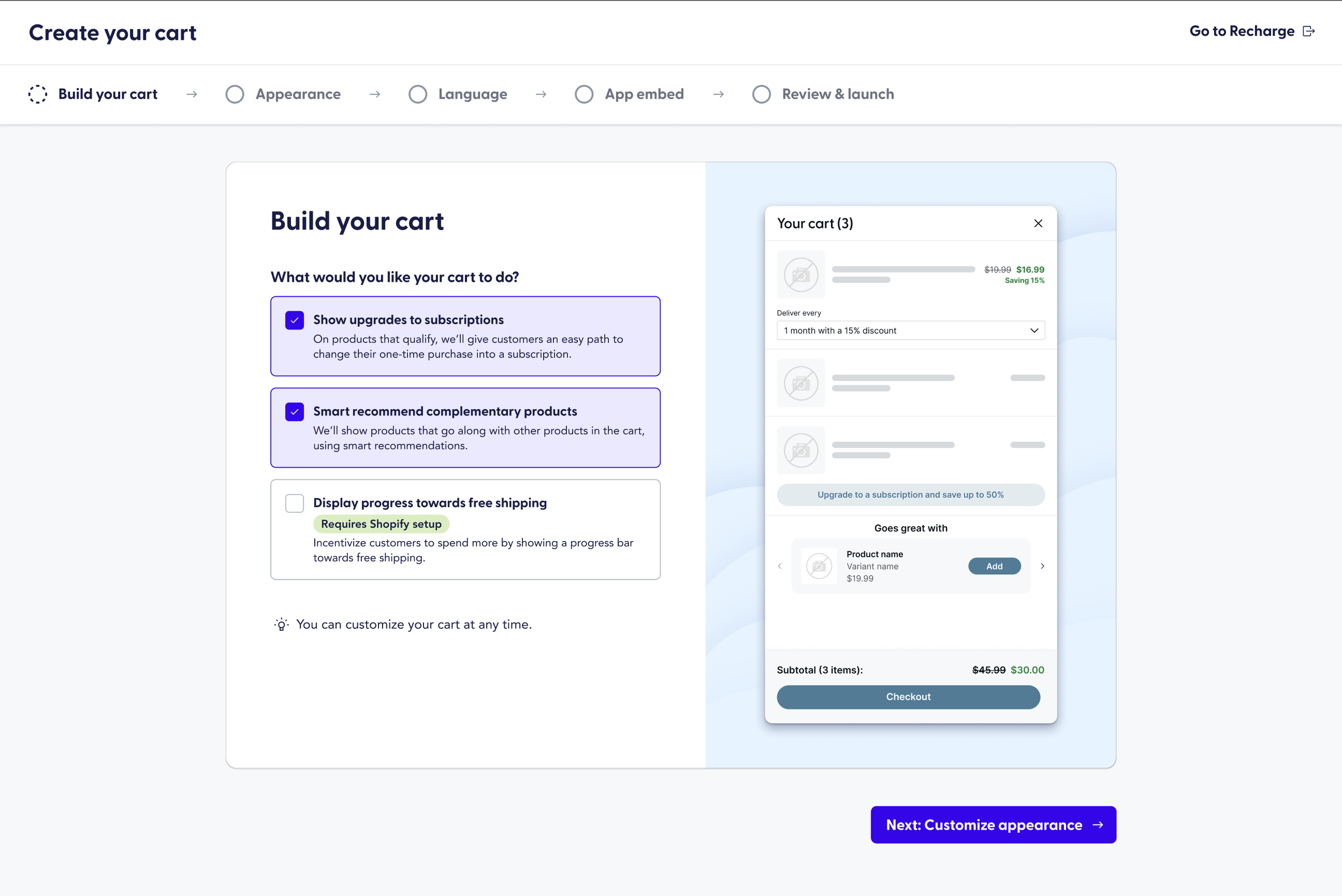
Top navigation concept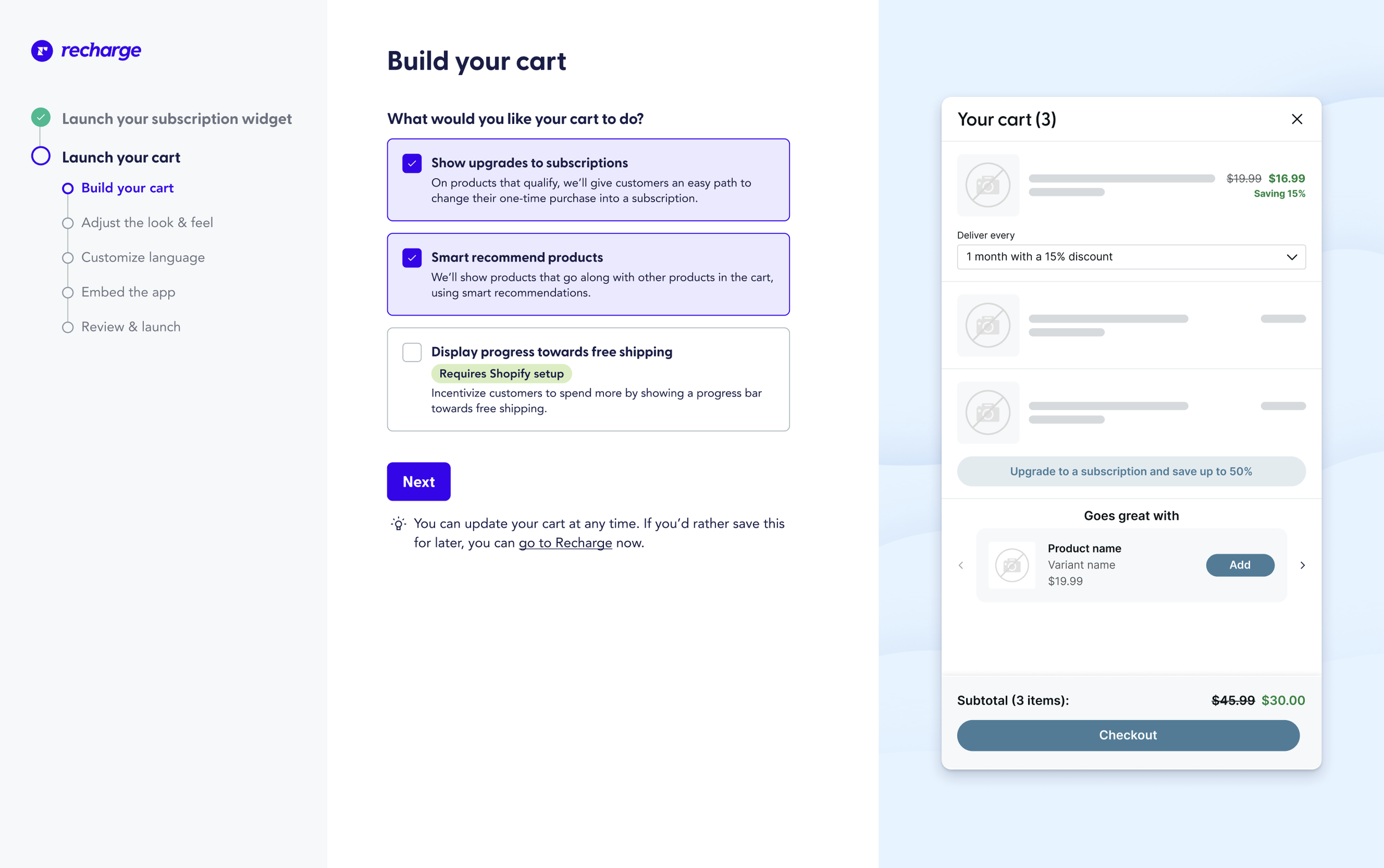
Side navigation conceptWhat we launched
We did a number of iterations and had feedback sessions as a small PM/dev/design team. One of the main goals was to keep cart setup simple in onboarding. It was quite a robust feature. I knew it well (I designed it :P) and knew the complexity that could go into it (advanced theming controls, language customizations, shipping progress bar setup, etc.). We didn’t want setup to feel overwhelming or complex though. Simple was best.
With simplicity as a guidepost, we narrowed cart setup to 5 required steps, all with smart defaults so that a merchant could simply review and progress through onboarding without adjusting anything if they wanted.
A new user's journey through cart onboardingOn December 1, 2025, we shipped:
A cart setup section added to the onboarding journey, positioned after widget setup
Full skip/explore affordances throughout. No merchant was forced through cart setup
New left-hand navigation to support the expanded flow
How we defined success
Cart activations increase
Onboarding should meaningfully drive more merchants to activate the cartWidget activations don't significantly decline
The 6-month baseline of ~780/month served as a guard rail. We prepared ourselves for a dip but didn’t want a dramatic decline.
Results
Cart activations nearly tripled
Before the launch, cart activations averaged 144/month over six months. After:
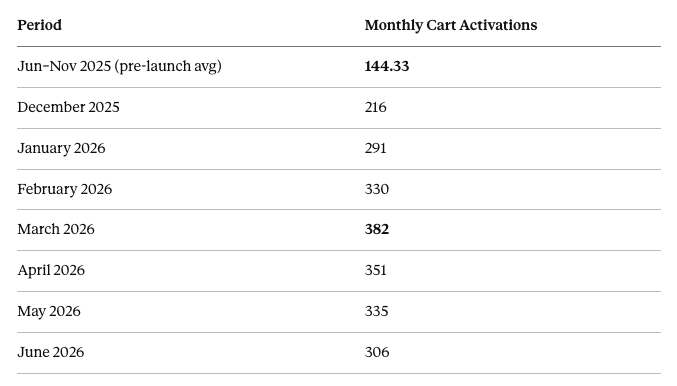
Cart activation counts from our internal Looker dashboardThe post-launch average across seven months is approximately 316/month…more than 2x the pre-launch baseline. March 2026 peaked at 382, nearly triple the six-month average before launch. This lift was a lasting shift in how merchants discovered and adopted the cart.
Core widget activation rate improve, consistently
The clearest signal that this experiment didn't compromise the core onboarding experience: the widget activation rate from onboarding beat the pre-launch average every single month after launch.
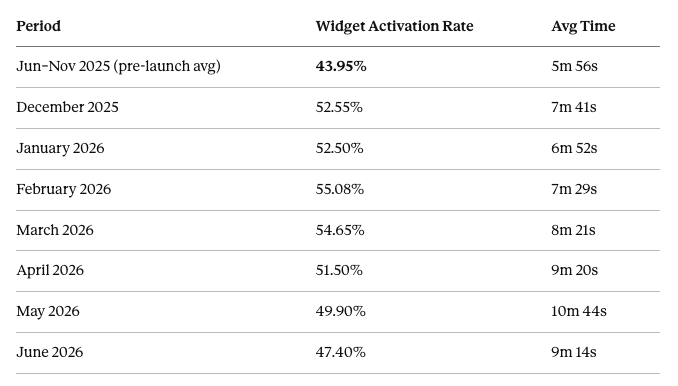
Widget activation rate captured via Fullstory funnelsMerchants who start onboarding are completing it at a higher rate than before. The cart step didn't add friction, it added structure.
Core widget activation held
Widget activations dipped in December (532), which was expected given the holiday season and a brand-new flow. They recovered steadily from January onward, averaging 729/month from January through June 2026. The existing average was 779/month. While a 6% dip, we attribute this to top-of-funnel issues in light of the widget activation rate increasing.
Reflections
As a product designer, I love to run experiments like this, especially when they feel bold. This one felt bold! Introducing more steps to our onboarding flow? That’ll never work. Activations and completion rates will surely tank.
But how rewarding to watch users go through the full, discover a new feature, and set it up without issue. Chef’s kiss!